Executive Summary
RAIDLOG.com took a tool that had lived on spreadsheets since the 1980s and turned it into a cloud-based, AI-powered SaaS platform — reaching 10,000+ users, 1,200 certified practitioners, and venture-backing trajectory in just three years.
The GTM strategy Lauren built was layered and deliberate. She pinpointed the ICP, identified that half the market didn't fully understand the product category, and turned that gap into an opportunity — writing the first book on the subject, publishing a targeted SEO content library before launch, and building a YouTube channel to meet visual learners where they were. A live PMI Global Summit presence moved thousands of attendees through a structured keynote-to-demo-to-offer funnel. A practitioner certification course converted education into paid licenses at scale. A podcast built community. A referral program drove a 40% increase in Enterprise accounts.
And when the time came to pursue venture backing, it was Lauren's personal relationship with Clate Mask — her former CEO at Infusionsoft — that opened the door to PHX FWD's Accelerator Program and everything that followed.
The throughline: own the category, educate the market, and never underestimate a relationship built long before you needed it.
The Origin Story: A Legacy Tool in Need of a Revolution
Long before project management software existed, Margaret Thatcher's government project managers in the 1980s relied on a simple but powerful tool — the RAID Log. It tracked Risks, Actions, Issues, and Decisions. For decades, it lived on paper, then migrated to Excel, where it still lives for millions of project managers worldwide today.
That's where the opportunity was hiding.
When RAIDLOG.com entered the market, the mission was clear: take a word-of-mouth, spreadsheet-bound resource and transform it into a cloud-based, AI-powered platform built for the modern PMO. Simple idea. Difficult execution. Breaking in required building multiple doors into the sales funnel — and the willingness to test, fail, and pivot until the right mix clicked into place.
Here's exactly how it happened.
1. Know Your ICP — Then Go Find Them
The foundation of every GTM strategy is understanding who you're selling to and where they actually spend their time.
For RAIDLOG.com, the target was clear: Project Managers and PMO Leaders — the frontline professionals who lived inside a RAID Log every day to track project risks, actions, issues, and decisions.
After mapping the audience, the next move was finding where they gathered. The answer was a mix of LinkedIn, Facebook groups, Reddit communities, and local PMI chapter events. These weren't random choices — they were where authentic PM conversations were already happening.
But there was a surprise hiding in the data: roughly half of the target audience didn't fully understand what a RAID Log was. Some called it a Risk Register. Others used the extended RAIDO framework (adding Opportunities). The terminology was fragmented, the education was scattered, and no one had stepped up to own the conversation.
That gap became a strategic advantage.
Artifact: ICP Event Strategy Map
Artifact: RAIDLOG - Marketing Plan - Q2 2022
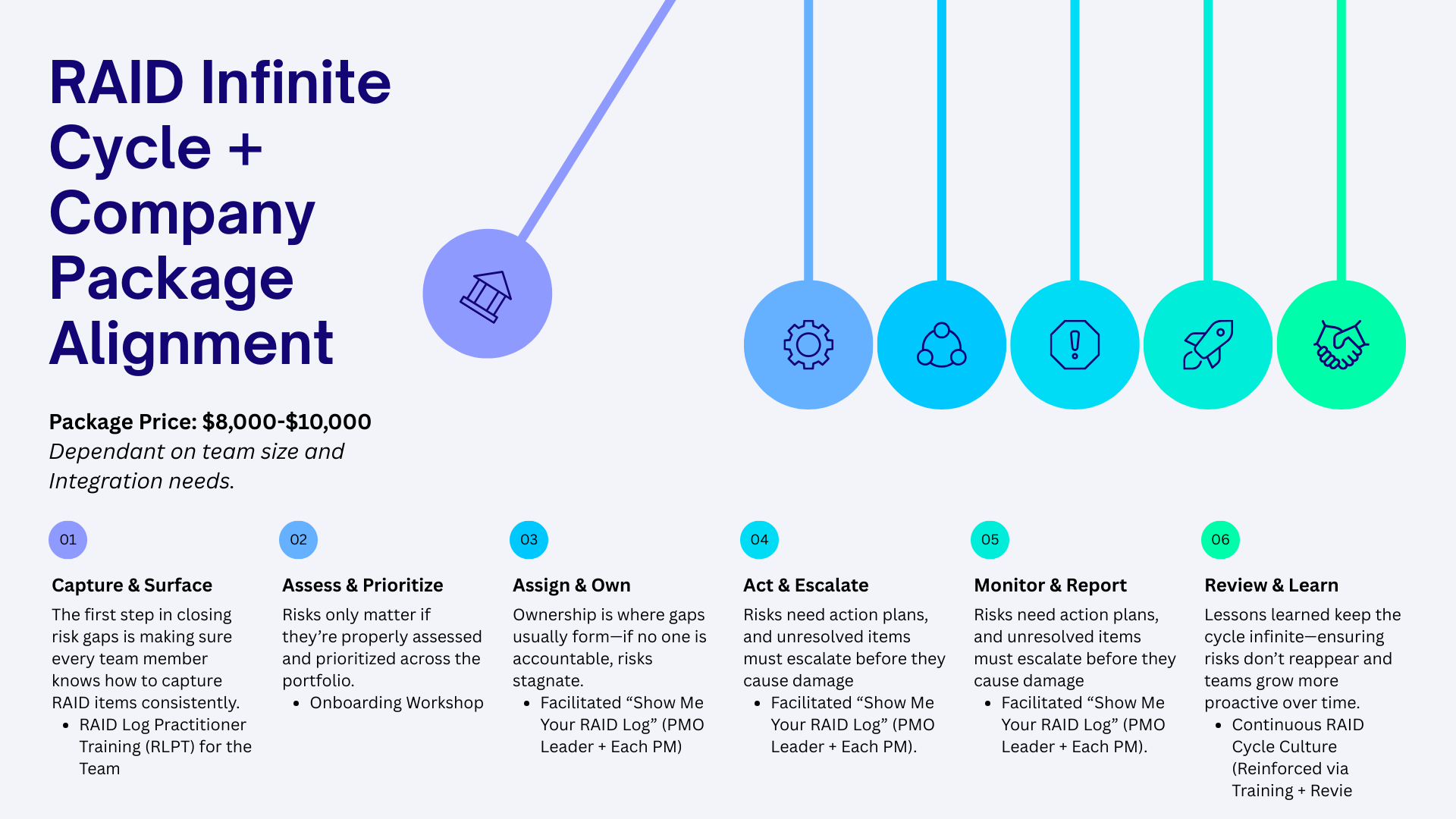
Image 1: PMO Infinite Cycle designed by Lauren Caughlan
2. Become the Authority — Write the Book
If no one owns the subject, own it yourself.
The team made the decision to have our CEO write the first-ever book on the RAID Log — a deliberate move to establish thought leadership, bridge the gap between legacy practice and modern methodology, and educate a market that was half-unaware of the tool they needed.
This wasn't just a credibility play. It was a content engine. The book seeded:
A blog series — one post for every component of a RAID Log, optimized for SEO
A YouTube channel — because 60% of people are visual learners, and written content alone wasn't enough
A searchable knowledge base that positioned RAIDLOG.com as the definitive resource in the space
The content strategy followed a simple principle: if someone searched anything related to project risk management, RAID Logs, or project tracking — RAIDLOG.com should be there.
Artifact: The Ultimate Guide To RAID Logs book
3. Own the Search Results — Before Anyone Else Shows Up
Building authority with a book was the long game. Winning the search results was the immediate one.
Before RAIDLOG.com ever launched publicly, we made a deliberate decision: dominate the SEO and AI search landscape for three critical keywords — Risk Register, RAID Log, and RAID Log Template. These were the exact phrases project managers typed into Google when they were already in pain and already looking for a solution. Owning those terms meant owning the top of the funnel.
The strategy was simple and disciplined: research and write the definitive articles on every angle of the topic, publish them before launch to build search equity, and continue releasing content throughout the first three months post-launch to sustain momentum and signal authority to search engines.
The content library we built:
What Is a RAID Log? — The foundational explainer. The first result anyone should find when they search the term for the first time.
RAID Log Methodology — A deeper dive into the framework itself, establishing RAIDLOG.com as the methodological authority.
How to Manage Multiple Projects — Targeting the real-world pain of PMO leaders juggling competing priorities across a portfolio.
How to Use Your RAID Log to Bring Order Out of Chaos — Emotionally resonant, practical, and written in the language PMs use to describe their actual experience.
Manage Projects Up and Down — Addressing the stakeholder communication challenge that sits at the heart of every PM's job.
A RAID Log Template You'll Actually Want to Use — A high-intent, high-conversion piece targeting anyone searching for a downloadable starting point — and finding RAIDLOG.com instead.
Exploring the Transformative Role of AI in Project Management — Forward-looking content that positioned RAIDLOG.com at the intersection of AI and project management before competitors were even thinking about it.
Unlocking the Secrets of Risk Registers and RAID Logs — A bridge article for the large portion of the audience who used the term Risk Register rather than RAID Log, capturing searchers across both naming conventions.
Each article was also synced with the YouTube channel, because written content alone only reaches a portion of the audience. With 60% of people being visual learners, every major topic needed both a readable version and a watchable one — doubling the surface area for discovery.
The result: by the time RAIDLOG.com launched, it wasn't arriving cold. It was arriving with search equity already built, an audience already educated, and content already indexed across the exact terms its ICP was searching every day. In an era where AI-powered search increasingly pulls answers from established, authoritative sources, being the site that wrote the book — literally and figuratively — meant RAIDLOG.com's content was exactly what those systems surfaced first.
4. Before any large-scale launch, the product needed real-world validation.
Early access was offered free to project managers the team already had relationships with — professionals who were genuinely suffering through Excel spreadsheets or half-baked RAID Log modules buried inside ERP systems that barely functioned. No pitch decks. No pressure. Just one request: a monthly feedback call.
Those calls were gold. Marketing listened for patterns — where the product created the most relief, what language customers used to describe their pain, which features made them say "finally." Those early whispers of success shaped both the product roadmap and the messaging that would carry RAIDLOG.com into its first major public moment.
5. Go Big — Launch at the Largest PM Conference in the World
Once the product was ready, it was time to get in front of 5,000 project managers at once.
RAIDLOG.com earned a live booth and top speaking slots at PMI Global Summit — the largest project management conference in the world. The keynote talks centered on a message that resonated instantly: billions of dollars are wasted each year on failed, unfinished, or cancelled projects. A well-run RAID Log — especially one powered by AI-driven risk assessment and lessons-learned integration — could change that.
But the keynote was just the opening act.
The real funnel was built in layers:
Keynote — Build awareness. Deliver the "why." Create urgency around the problem.
Live Technical Demo — One hour. A coveted, purchased time slot at the conference. Attendees who heard the keynote were funneled directly here to see the "how."
Book Inserts on Every Chair — Before attendees sat down, a printed insert told the product story and ended with a QR code and a 20% discount code to move interested prospects from curiosity to action.
The freemium model was already priced at 80% below competing systems that claimed to include RAID Log functionality — making it feel like an obvious, low-risk try. The discount pushed hesitant prospects over the line.
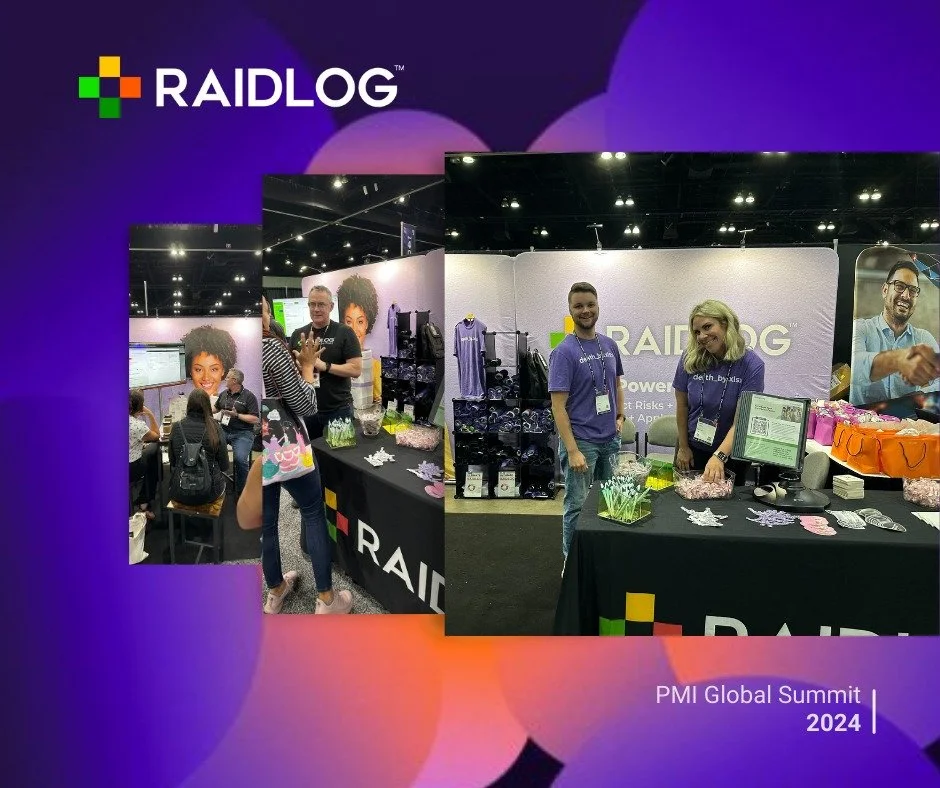
Image 2 - RAIDLOG.com booth at the PMI Global Summit 2024
Artifact: The "In-the-Wild" Event Photos
Artifact: Insiders look at the Technical demo live at PMI Global Summit 2024
Artifact: Insiders look at PMI Global Summit 2024 booth during customer demo
Artifact: PMI Global 2023 Booth
Artifact: Keynote book insert
Artifact: Sticker Asset 1 + Sticker Asset 2
Artifact: VIP Welcome Bag Insert
6. Close the Education Gap — Build the Certification
Year one at PMI Global Summit confirmed the insight gathered earlier: about 50% of the audience still didn't fully understand what a RAID Log was or how to use it effectively.
Rather than view that as an obstacle, the team saw it as an opportunity.
Inspired by Marcus Sheridan's They Ask, You Answer methodology, RAIDLOG.com launched the RAID Log Practitioner Certification — a four-hour online course that taught project managers exactly how to build and manage a RAID Log on real projects.
The course wasn't just educational. It was strategically designed:
4 PDU credits toward annual PMI certification requirements — something every PM actively needs
A shareable certification badge for LinkedIn profiles and resumes
A one-year RAIDLOG.com license included — moving students from learning into practice with the actual product in their hands
Converting freemium users to paid subscribers was never going to happen overnight. It took 2.5 years of iteration to perfect the event-to-funnel-to-certification pipeline. But once it worked, the results were significant: 1,200 certified users globally and certification courses delivered to over 30% of PMI chapters worldwide.
Artifact: The Certification Badge & Course Syllabus
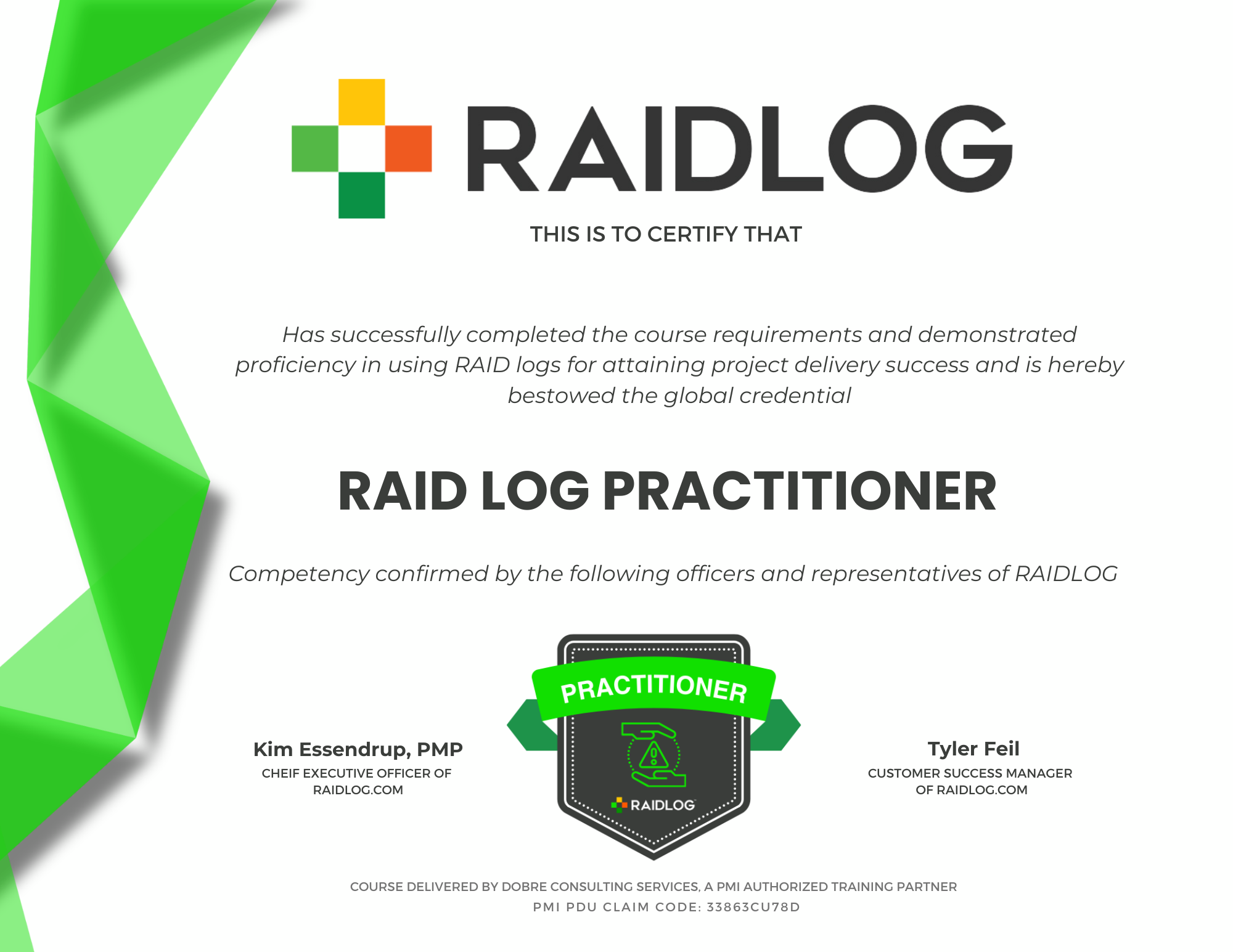
RAID Log Practitioner Certification designed by Lauren Caughlan
7. Build Community — Launch the Podcast
For the half of the audience that already understood RAID Logs and wanted to go deeper, a different kind of content was needed.
Enter: "Show Me Your RAID Log" — a podcast that invited experienced project managers and PMO leaders to discuss how they actually applied RAID Logs in real-world, high-stakes projects.
As AI features were added to the platform, the podcast evolved too. New questions were layered into each interview, steering conversations toward how AI was changing project outcomes and what that meant for the profession. The podcast became both a community builder and a product education vehicle — authentic, credible, and peer-led.
Artifact: YouTube — Show Me Your RAID Log Podcast
Artifact: AI social media posts launch pack
Artifact: 6.0 Launch video for website and social media
8. Turn Users Into a Growth Engine — Referral + Enterprise
With a growing certified user base, the next lever was referral.
Every course graduate was enrolled in a nurture campaign spanning both email and social media, designed around one goal: refer other project managers in their organization and trigger the creation of an Enterprise account.
The results: a 40% increase in Enterprise accounts created.
But referrals only work if IT teams say yes — and that's often where enterprise deals die. RAIDLOG.com got ahead of that objection by:
Building with an open API to integrate with existing enterprise tools
Publishing technical blog content specifically written for IT teams — addressing privacy, security, support, and integration concerns before they became blockers
The team learned early that IT approval wasn't a formality — it was a make-or-break moment for every long-term enterprise contract. So they built content and architecture to win that conversation before it started.
Artifact: The "IT-Ready" webpage
Artifact: Support Center for users
Artifact: Pathway to Enterprise landing page
9. Powering Growth Through Strategic Partnerships
To scale awareness beyond our own reach, we designed a Partnership Ecosystem that lent us immediate academic and professional credibility. We didn't just want users; we wanted the institutions that train the users.
University Alliances: We partnered with prestigious institutions like Arizona State University (ASU) and Boston University to integrate RAIDLOG.com into the next generation of PM talent.
The Influencer Network: We collaborated with industry titans like Dr. Tony Prensa, PM Happy Hour Podcast, The Smart PM and a global network of consultants. These partners didn't just use the system; they advocated for it within their own high-value client networks.
Consulting Synergy: By building a dedicated partner portal, we allowed consultants to bring the "RAIDLog Way" to their clients, creating a self-sustaining referral engine.
Artifact: ASU + RAIDLOG.com Press Release
Artifact: Boston University + RAIDLOG.com Press Release
Artifact: Partnership Landing Page + Catalogue
10. Enterprise Traction Opens the VC Door
The first 10 paying Enterprise customers changed the company's trajectory.
With real revenue and enterprise logos, RAIDLOG.com attracted the attention of Venture Capitalists. The CEO was introduced to strategic buyers and entered technology innovation competitions across Arizona and the United States. Most notably, RAIDLOG.com was accepted into PHX FWD's Accelerator Program — and that door only opened because of Lauren.
It was Lauren's long-standing relationship with her former CEO, Clate Mask — co-founder of Infusionsoft (now Thryv) — that made the introduction possible. Years of earned trust, built through her time working alongside Clate, gave Lauren the credibility to make the call, make the ask, and get RAIDLOG.com in the room. Without that relationship, PHX FWD never happens. It's a reminder that in GTM strategy, your network isn't just a nice-to-have — it's sometimes the single variable that unlocks the next stage of a company's growth.
Image 3: PHX FWD Logo
Where It Stands Today
Thousands of users. 30%+ of global PMI chapters certified. The first venture-backed RAID Log SaaS company in the world — within reach.
The GTM playbook that built RAIDLOG.com wasn't linear. It was a three-year process of identifying the right audience, educating a fragmented market, building trust through certification and community, and systematically converting education into enterprise revenue.
The lesson isn't just about project management software. It's about what happens when a team commits to owning a category — from the first blog post to the first keynote to the first VC conversation.
Build the authority. Educate the market. Remove every barrier to entry. Then turn your best customers into your best sales team.
That's the playbook.